Two National Register districts
The Ocala Historic District (1984, 172 acres, 220 historic buildings) and the Tuscawilla Park Historic District (1988, about 20 acres) — both locally and nationally designated.
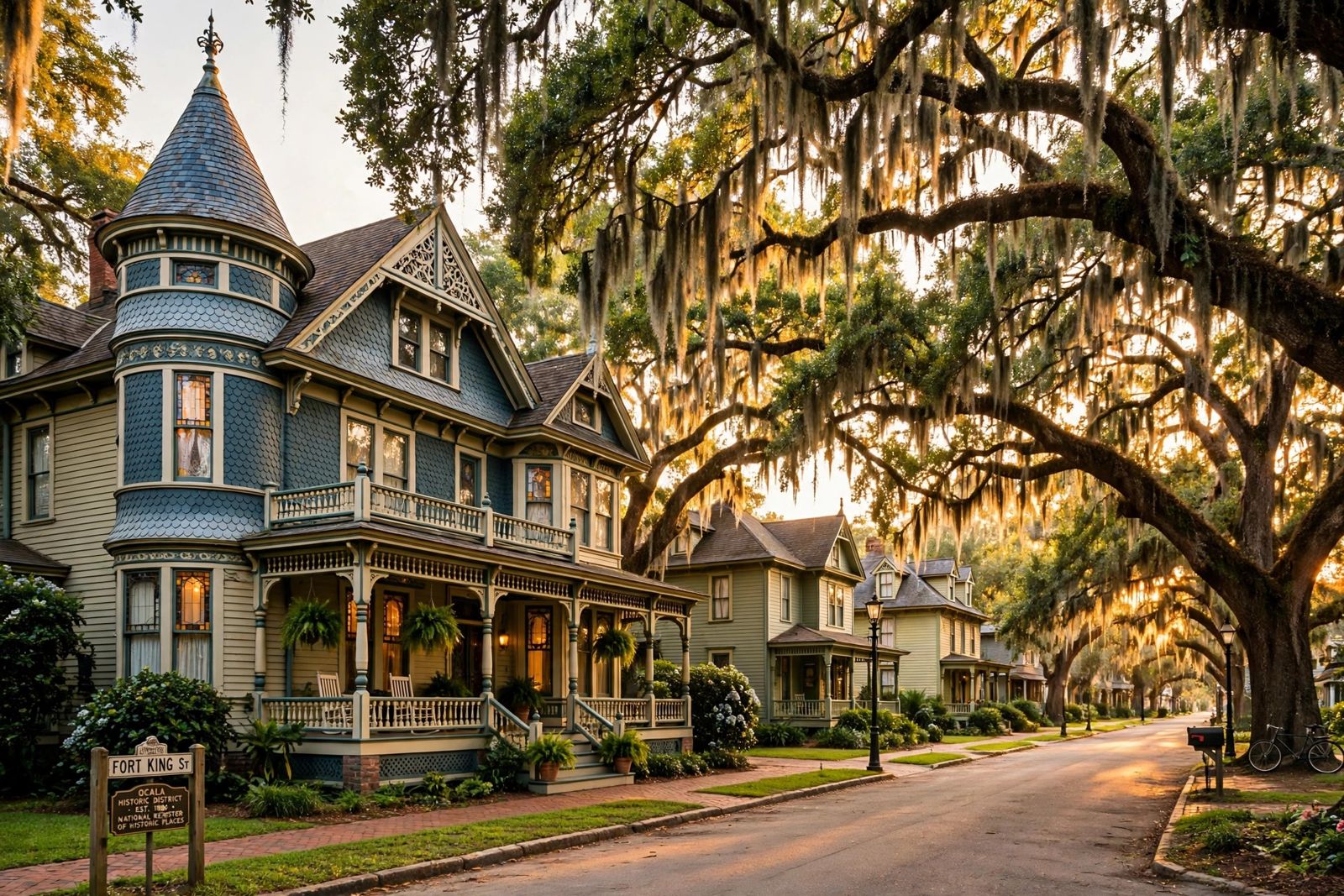
National Register historic living · Fort King Street & Tuscawilla Park · Ocala, Florida
District overview
The Ocala Historic District is Ocala’s large residential historic district southeast of downtown — 172 acres centered along Fort King Street, with 220 historic buildings dating mainly from 1880 to 1930. Just northeast of downtown, the smaller Tuscawilla Park Historic District wraps around its namesake park.
Both districts are listed on the National Register of Historic Places and are also locally designated — the Ocala district in 1984 and Tuscawilla Park in 1988. Together they hold one of Florida’s most distinctive collections of early homes: Queen Anne Revival landmarks on the older western streets, generous Revival-style residences built during the 1910s–1920s boom further east, and modest American bungalows and frame vernacular homes in between. There is no single subdivision or master HOA pattern here — each property, lot, and preservation status should be verified individually.
Contact Jennifer for a current market evaluation — pricing here varies widely by condition, restoration quality, lot, and contributing status.
The Ocala Historic District (1984, 172 acres, 220 historic buildings) and the Tuscawilla Park Historic District (1988, about 20 acres) — both locally and nationally designated.
Queen Anne Revival, Colonial and Classic Revival, Mediterranean and Tudor Revival, American bungalow, and frame vernacular styles, per the City of Ocala.
Because both districts are locally designated, exterior work may require a Certificate of Appropriateness approved by the Ocala Historic Preservation Advisory Board before work begins — confirm requirements with the City for any specific project. This guide is general information, not legal advice.
Downtown Square dining and events, Tuscawilla Park, and the Reilly Arts Center are all within a short walk or drive of the districts.
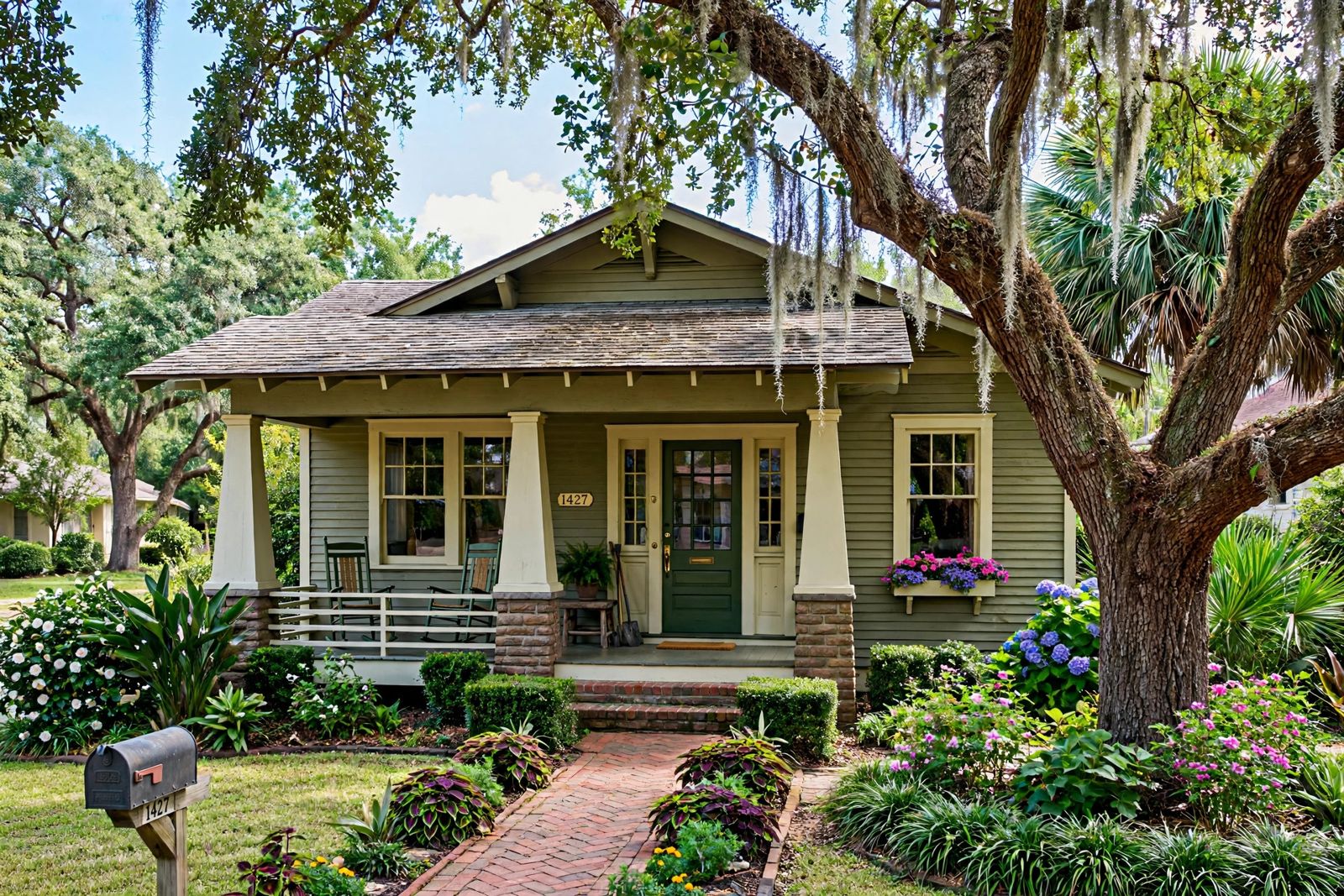
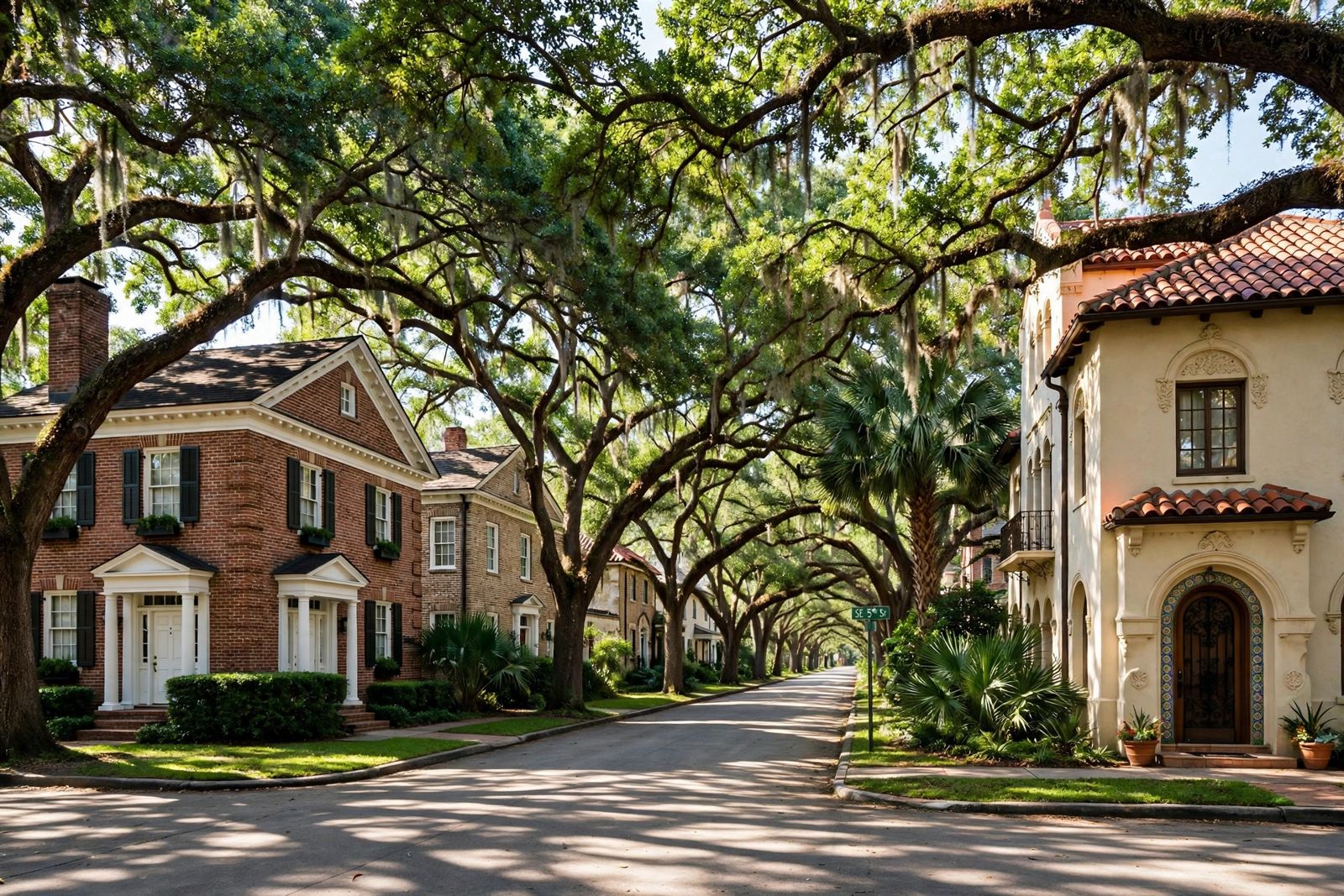
Two districts, distinct character areas
This is a historic district, not a subdivision — its character changes street by street, from landmark Queen Anne homes near downtown to larger boom-era residences under the oaks further east, and to the park-side streets of Tuscawilla.
The main residential district: bounded generally by Broadway, SE 8th Street, Silver Springs Place, SE 3rd, 13th, and Watula Avenues, centered along Fort King Street. Listed on the National Register January 12, 1984.
The district’s oldest spine, where development began in the 1880s. The John Dunn House at 416 Fort King Street (by 1884) is a noted Queen Anne Revival example.
Eastward growth along Fifth Street documents Ocala’s boom period — large Colonial, Georgian, Mediterranean, and Tudor Revival residences on extensively landscaped sites, culminating in three Tudor Revival homes in the 1200 block.
A smaller residential district northeast of downtown, listed March 30, 1988, with buildings dating from about 1877 to 1930 — mostly frame vernacular and bungalows, plus Queen Anne, Colonial Revival, and other period styles, a former synagogue (1888), and a former women’s club.
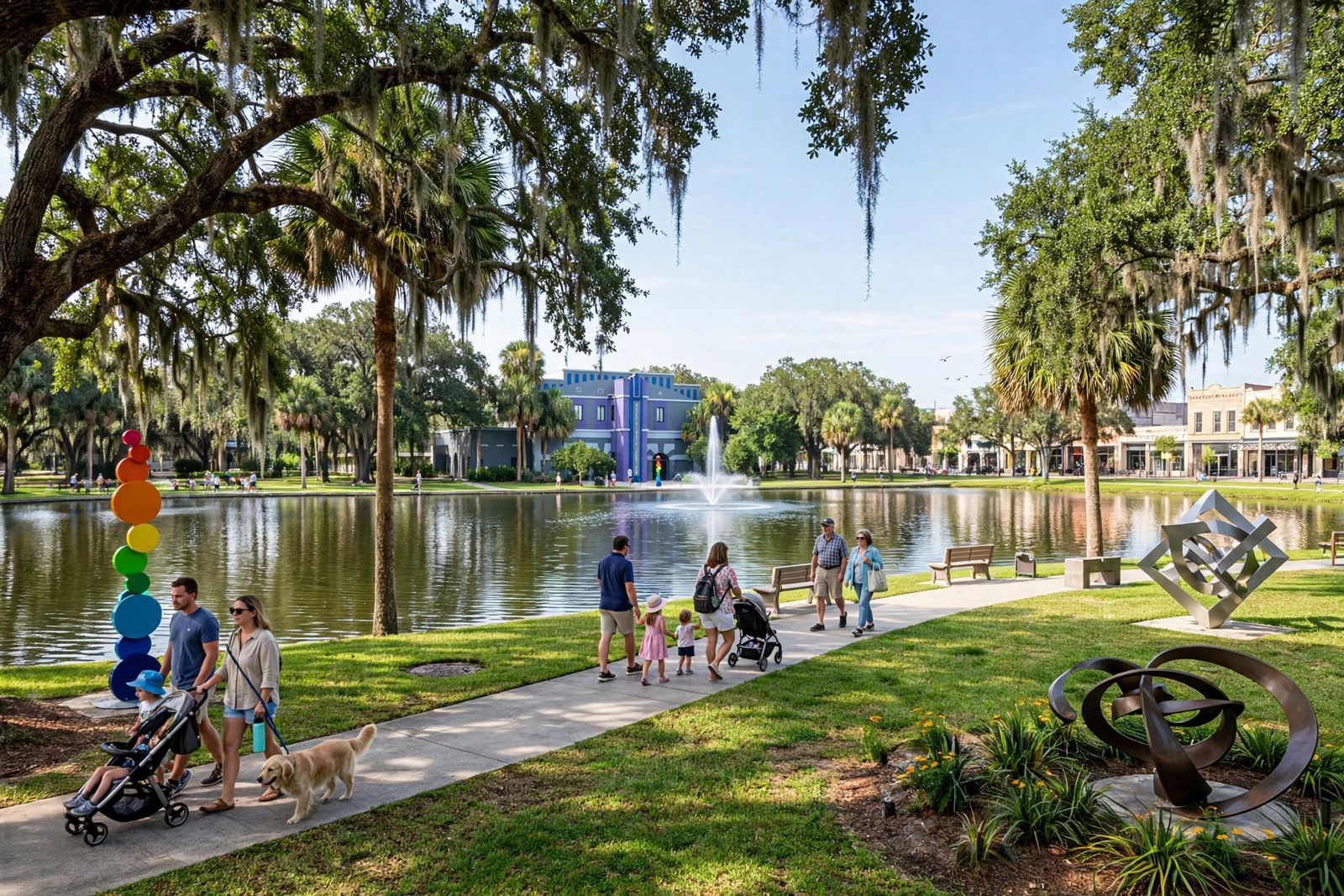
The district’s green heart — about ten acres in the historic section, centered on its lake/spring, and home today to trails, art, and the Reilly Arts Center at its edge.
Historic plats that shaped both districts: Joseph Caldwell’s 1880 50-block plat southeast of the original city, and the 1912 Davidson subdivision, known for smaller, substantial middle-class homes and bungalows.
Boundaries, contributing status, and preservation requirements vary by property. Jennifer can help you confirm a specific home’s district status and what approvals may apply before you buy or renovate.
Tour the districtsLiving here
Living in the districts means trading a subdivision amenity package for something rarer: walkable streets, a real downtown square, a landmark park, and an arts scene — all woven into daily life.
The historic downtown square — dining, shops, the Marion Theatre, and community events — sits just west/northwest of the districts.
Lake, walking paths, playgrounds, and the Tuscawilla Art Park sculpture walk, a few blocks northeast of downtown.
Ocala’s home for the arts and live entertainment at 500 NE 9th Street in Tuscawilla Park — described as five blocks from the Downtown Square, and home to the Ocala Symphony Orchestra.
Restaurants, cafés, and downtown nightlife are minutes away — no long drive home after dinner or a show.
Gallery walks, public art in Tuscawilla Art Park, and historic architecture on nearly every block.
Downtown festivals, markets, and square events run through the year — check City and downtown calendars for current dates.
Massive oaks, deep front porches, and landscaped lots give the districts their unmistakable, shaded character.
Primarily residential, with some homes adapted over time to apartments, condominiums, or professional offices near the district edges — verify zoning and use for any specific property.
Home styles & details
Per the City of Ocala, styles in the Ocala Historic District include Queen Anne Revival, Mediterranean Revival, Classic Revival, Tudor Revival, Romanesque, American Bungalow, Georgian Revival, Vernacular, Colonial Revival, and Carpenter Gothic. Tuscawilla Park adds frame vernacular, Second Empire, Gothic and Spanish Revival examples. Expect original details — and older-home ownership: confirm systems, insurance, and any preservation approvals early.
Prices here do not move like a subdivision — condition and restoration quality can matter as much as square footage, so ranges are wide and every home needs its own analysis.
Recent listings and sales reviewed for this guide spanned roughly the $400,000s to $700,000 and above — for example, a 1913 bungalow listed at $476,000, an 1887 Victorian listed at $599,000, a 1922 Victorian asking $649,000 after a reduction, and a 1918 home that sold for $725,000. Larger, fully restored landmark homes can command more; homes needing major restoration can ask less. These are individual examples, not a median or a guarantee.
Examples drawn from recent Stellar MLS listing/sale pages reviewed November 2026. Contact Jennifer for a current, property-specific snapshot from Stellar MLS data.
Why work with Jennifer
Jennifer Hay has guided Ocala buyers and sellers since 2003. As a Broker Associate with Axen Realty and a Mortgage Loan Originator with NEXA Lending, she pairs neighborhood expertise with in-house financing guidance most agents can’t offer — especially valuable for older homes.
A Realtor since 2003, Jennifer knows historic Ocala street by street — and how district status, condition, and restoration history affect value.
As an MLO with NEXA Lending, she can walk qualified buyers through financing options — including renovation financing — alongside the home search.
Jennifer can help you flag where a Certificate of Appropriateness may be required and connect the renovation plan to the financing plan before you commit.
Jennifer can help qualified buyers compare mortgage options through NEXA Lending. Older homes may need a closer look at condition and appraisal requirements — the right program depends on the borrower, property, occupancy, income, credit and current guidelines.
Qualified buyers may choose from fixed- or adjustable-rate conventional options, with down-payment and mortgage-insurance requirements that vary by program and property condition.
Qualified buyers may explore renovation loan options, such as FHA 203(k) or similar programs, that may allow eligible purchase and repair costs to be financed together — subject to program rules, contractor and property eligibility. You may qualify even if a home needs work; ask Jennifer to review the specifics.
Eligible buyers may qualify for FHA financing with flexible credit and down-payment guidelines; the property must meet applicable FHA condition standards, which matters for older homes.
Eligible veterans, active-duty service members and certain surviving spouses may qualify for VA financing, which may include a zero-down-payment option, subject to property condition requirements.
Programs, rates, terms, loan limits and funding availability are subject to change. Not all borrowers, properties or communities will qualify. This is not a commitment to lend.
Ask Jennifer about financing

NEXA Lending · 5559 S Sossaman Rd, Bldg 1 #101 · Mesa, AZ 85212
Your Ocala Historic District contact
Jennifer Hay · Axen Realty Broker Associate · NEXA Lending Mortgage Loan Originator
FL Real Estate License BK3150197 · NMLS ID 2612003 · REALTOR® since 2003 · Equal Housing Opportunity